Season, monsoon and winter
Best time for the Adi Kailash and Om Parvat yatra
Two good windows, one dangerous one, and a winter in which the villages you would stay in are empty. With the dates that are actually documented.
- Local Kumaon routes
- Clear trip guidance
- Driver-led travel
Quick answer
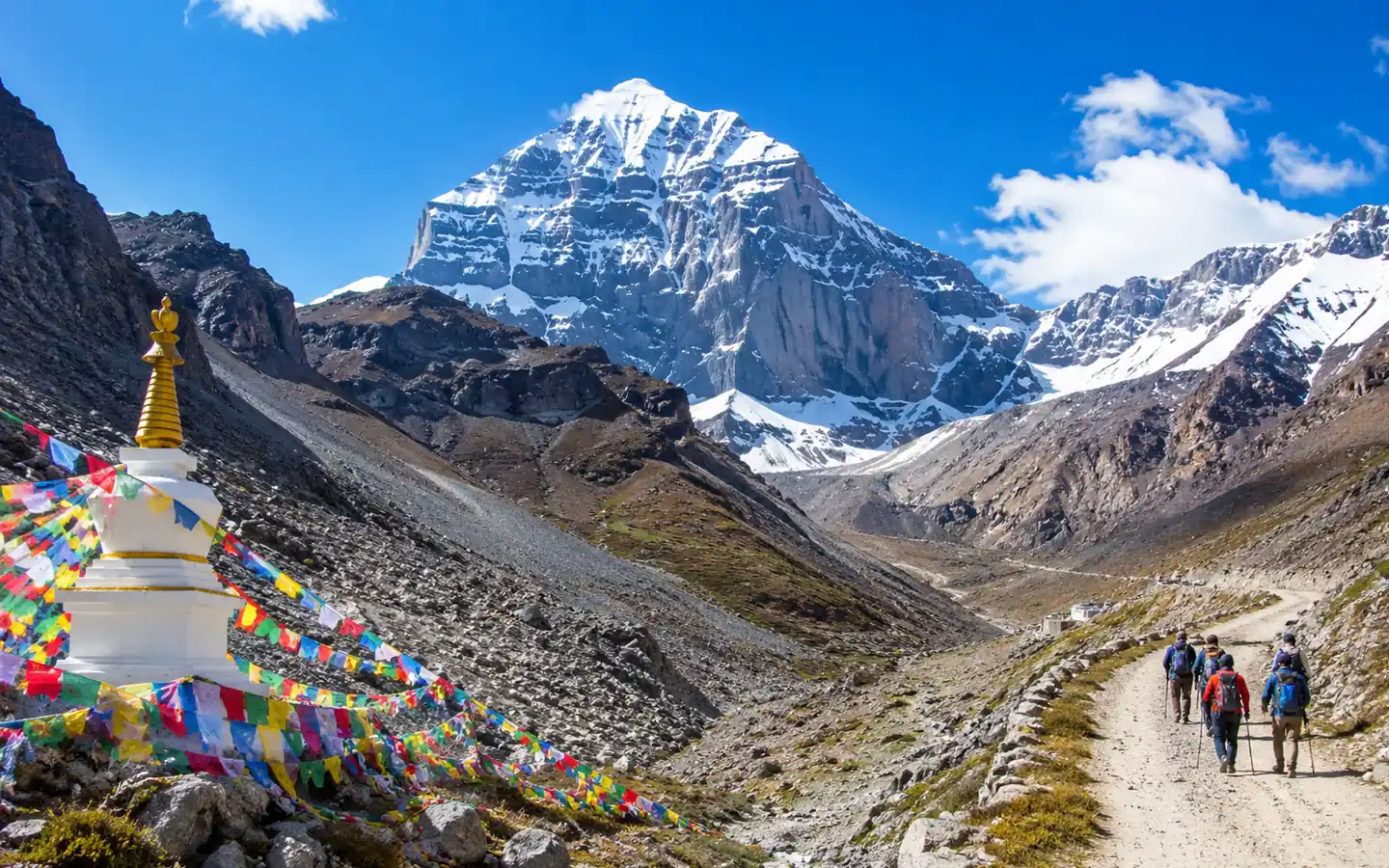
The nominal season is 1 May to 30 November, with a monsoon interruption in July and August. The genuinely good windows are May to June and mid-September to October. December to March is snow, and the Vyas Valley villages including Gunji empty out completely — residents move down to Dharchula, so there is often nobody up there to host you. In July and August there is one road and it closes; when it does, you wait where you are, possibly for days.
Inner Line Permits were suspended on 2 July 2026 and we have not confirmed that they have resumed.
Pithoragarh district administration stopped issuing Inner Line Permits on 2 July 2026 because of continuous rainfall. On 18 August 2026 the Tawaghat-Gunji road was closed by boulder falls at Malghat and Kulagad, cutting off the Vyas Valley. District officials have indicated permits may restart in September, but we have not seen that confirmed. Do not book non-refundable travel for this route until you have spoken to the SDM Dharchula office.
Last verified by us on 22 August 2026. Our dated route status page carries the full 2026 timeline and the district control room numbers, so you can check it yourself rather than take our word for it.
What the season has actually looked like
Rather than describe a typical year, here are the two seasons we have dated evidence for. Note how little of it is predictable in advance.
| Year | Opening | Closing or interruption |
|---|---|---|
| 2025 | Inner Line Permit applications from 28 April; permits issued from 30 April; the yatra began 2 May, when the Shiva temple at Parvati Kund opened. | Permits were extended to 30 November. The yatra was suspended and ILPs stopped from 1 December. |
| 2026 | Permits from 28 April; the temple opened and the yatra began 1 May. | Suspended on 2 July for the monsoon, with permits stopped entirely. Not confirmed resumed as of 22 August 2026. |
The pattern is stable; the dates are not. Both seasons opened in the last days of April and both were governed by a temple opening at Parvati Kund rather than by a tourism calendar. What 2026 shows is the other half of the truth: an opening date tells you nothing about whether the season will run through.
The year-round announcement — an intention, not a fact
On 7 August 2026, the District Magistrate of Pithoragarh, Ashish Bhatgain, announced on the Chief Minister’s direction that the Adi Kailash Yatra will operate year-round, “except during adverse weather conditions and unforeseen emergencies”. Line departments were told to prepare an action plan covering roads, water, power, healthcare, security, accommodation and sanitation.
Read that as an announced intention, not as a description of how the route works today. Two things about the timing are worth holding on to. It was announced while Inner Line Permits were still suspended, and it was announced eleven days before boulder falls at Malghat and Kulagad closed the Tawaghat–Gunji road and cut off the Vyas Valley entirely.
The carve-out — “except during adverse weather conditions” — is doing an enormous amount of work in that sentence, because adverse weather is precisely what closes this road. If year-round operation becomes real, it will show up as permits being issued in January, not as a press statement in August. We will report it on the status page when we see it.
Month by month, honestly
| Month | What to expect | Our view |
|---|---|---|
| January – March | Snow. The Vyas Valley villages are empty. | No. Not a question of difficulty — there is often nobody there. |
| April | Permits typically open in the last days of the month; the temple has not yet opened. | Useful for arriving into Dharchula and being ready, not for going up. |
| May | The season opens. Cold at Gunji and above, clear air, snow still lying high. | One of the two best windows. Also the busiest, because everyone knows it. |
| June | Warmest of the open months at altitude. Pre-monsoon showers appear late in the month. | Very good, with an eye on the forecast in the last week. |
| July | Monsoon. In 2026 permits stopped on 2 July. | No. See the section below, which we are not going to soften. |
| August | Monsoon at its most active. Slides at the named points; Om Parvat’s snow has twice vanished in this month. | No. |
| Mid-September – October | The monsoon withdraws. Clear, cold, stable. | The other best window, and quieter than May. Our own preference, if the road has reopened. |
| November | Cold sharpens quickly. In 2025 permits ran to 30 November. | Workable early in the month for the well-equipped. Late November is a gamble on both weather and services. |
| December | In 2025 the yatra was suspended and ILPs stopped from 1 December. | No, whatever the year-round announcement eventually means. |
Winter: the part almost nobody tells you
The Vyas Valley villages, Gunji included, depopulate entirely in winter.
This is not a description of a quiet season. The residents migrate down to Dharchula and the villages are left empty. The homestays that make this journey possible — more than a hundred of them across the seven Vyas Valley villages as of February 2025 — are homes, and in winter the families who run them are not there.
So the winter question is not really “is the road open?” It is “is there anybody at 3,200 m to feed me and give me a bed?” and for much of the December-to-March period the answer is no. A page that tells you winter is “challenging but rewarding” has not thought about where you would sleep.
This is also the thing that makes the year-round announcement a genuinely large undertaking rather than a scheduling change. Running a yatra in January means someone has to be living up there to run it.
The monsoon — and we are not going to soften this
Here is the shape of the risk, stated as plainly as we can manage.
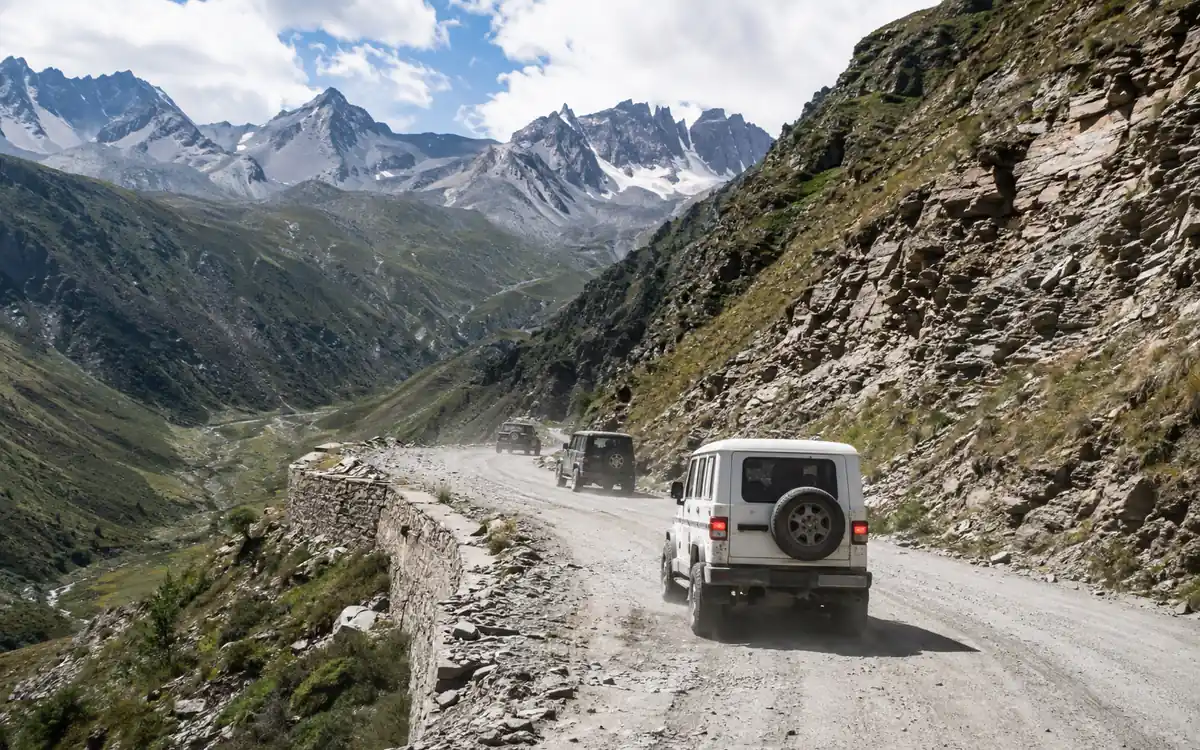
There is one road. Not a main route and an alternative. One. When Malghat or Garbadhar goes, the Vyas Valley is cut off completely, and you wait where you are — possibly for days, above 3,000 m, with no mobile signal, in accommodation that was not planned for the extra nights.
That is not a hypothetical. It is a pattern with dates:
| When | What happened | Source strength |
|---|---|---|
| 1998, Malpa | A landslide killed around 205 people, including about 60 Kailash Mansarovar pilgrims. | Medium–high |
| May 2023, Garbadhar | The hillside “suddenly cracked”. The BRO spent four days clearing it; traffic stalled completely; the third and fourth Adi Kailash pilgrim groups were stuck. A fresh slide followed the clearance. | Medium–high |
| 2 July 2026 | Continuous rainfall. The district administration stopped issuing Inner Line Permits entirely, with resumption only after a weather review. | High — government news agency |
| 18 August 2026 | Boulder falls at Malghat and Kulagad closed the Tawaghat–Gunji road. Vyas Valley cut off; Gunji, Chhiyalekh, Nabi, Budhi and Garbyang isolated; hundreds of vehicles and travellers stranded on both sides; 23 rural roads blocked. Villagers reported pregnant women unable to reach hospital. | High |
Two further things worth knowing. First, a fresh slide often follows a clearance — the May 2023 sequence is the documented example, and it is why “the road reopened this morning” is not the same as “the road is reliable”. Second, landslides also strand people below Dharchula, on the Tanakpur–Tawaghat side, so being outside the Vyas Valley is not the same as being out of the way of it.
What this means for a booking. Ask any operator, including us, one question before you pay: what happens to my money and my vehicle if the road shuts for two days? The answer separates operators who have been on this road from operators who have read about it.
Our position is that we will not take a non-refundable booking on the assumption that permits resume by a given date, and we will tell you if we think your dates are unwise. We would rather lose the booking than have you stuck at Budhi with a flight to catch.
What to check, and in what order
None of these will tell you the state of the road three weeks from now. They will tell you the state of it this week, which is the most anyone can honestly offer.
- The SDM Dharchula’s office. This is the only authority that can tell you whether Inner Line Permits are being issued today. Everything else is commentary. See the permit guide.
- The Pithoragarh District Disaster Management control room — 05964-226326 and 05964-228050 — and the national helpline 1077. The nodal officer is the ADM, Pithoragarh. Be aware, honestly, that the district’s disaster page carries contacts and relief documents but does not publish live road status.
- The Uttarakhand State Disaster Management Authority, usdma.uk.gov.in.
- IMD rainfall warnings for Pithoragarh district. A red or orange warning for this district in July or August is not a detail.
- Amar Ujala’s Pithoragarh edition. This is genuine advice, not a throwaway: the local Hindi press is consistently the fastest and most detailed source on this specific road, ahead of any English outlet or travel site. If you do not read Hindi, a browser translation of the Pithoragarh page will still beat anything else available.
Our own dated summary of all of the above lives on the route status page, and it carries the date we last checked, because a status without a date is not a status.
So when would we actually go?
Mid-September to mid-October, if the road has reopened after the monsoon. The air is clear, the crowds of May have gone, the villages are still occupied, and you are past the worst of the slide season. Late May is the other answer, and the more reliable one for a fixed-date trip booked months ahead.
Whichever you choose, build in a spare day. On this road a spare day is not a luxury; it is the difference between a delay and a cancelled flight. The Kathgodam charter page sets out a realistic day count, and if you are travelling with anyone older, read the guide to travelling with elders before you fix dates at all.
Tell us your dates and we will tell you honestly
Send us the window you are thinking of and we will say what we last heard from Dharchula, whether the dates make sense, and what we would change. If we think you should not go on those dates, we will say that instead of taking the booking.
Common questions
What is the best time for the Adi Kailash yatra?
May to June, and mid-September to October. May and June are the classic window and the busiest; mid-September to October is clearer and quieter but depends on the monsoon having withdrawn and the road having reopened. July and August are the monsoon and we would not send anyone then.
When does the Adi Kailash yatra open and close?
The nominal season is 1 May to 30 November. In 2025 permit applications opened on 28 April, permits were issued from 30 April, the yatra began on 2 May when the Shiva temple at Parvati Kund opened, and it was suspended with ILPs stopped from 1 December. In 2026 permits opened on 28 April and the yatra began on 1 May.
Is the Adi Kailash yatra going to run all year now?
On 7 August 2026 the District Magistrate announced, on the Chief Minister’s direction, that the yatra will run year-round except during adverse weather and unforeseen emergencies, with departments told to prepare an action plan. That is an announced intention. It was made while permits were suspended and days before landslides closed the road, so treat it as a plan rather than a timetable.
Can you visit Adi Kailash in winter?
In practice, no. December to March is snow, and the Vyas Valley villages including Gunji depopulate entirely — the residents move down to Dharchula. The homestays that make this trip possible are homes, and in winter the families are not in them. The question is not whether the road is open but whether anyone is up there to host you.
How risky is the Adi Kailash road in the monsoon?
There is one road, and when it goes at Malghat or Garbadhar the Vyas Valley is cut off completely. In May 2023 the BRO spent four days clearing a slide at Garbadhar and a fresh slide followed. On 18 August 2026 boulder falls at Malghat and Kulagad closed Tawaghat–Gunji and stranded hundreds on both sides. The 1998 Malpa landslide killed around 205 people.
How do I check whether the Adi Kailash road is open?
Ring the SDM Dharchula’s office for permits, and the Pithoragarh District Disaster Management control room on 05964-226326 or 05964-228050, or the national helpline 1077, for the road. Watch IMD warnings for Pithoragarh district. Amar Ujala’s Pithoragarh edition is genuinely the fastest reporting on this road.
Does the monsoon only affect the road above Dharchula?
No. Slides also strand travellers below Dharchula — the Tanakpur to Tawaghat road has closed with pilgrims caught on it. Being outside the Vyas Valley does not put you out of the way of the weather.
Should I book non-refundable travel for Adi Kailash?
We would not. Permits were stopped outright on 2 July 2026 and had not been confirmed resumed weeks later. Before you pay anyone, ask what happens to your money and your vehicle if the road shuts for two days, and build a spare day into the plan.
Sources and further reading
Where this page states a fact about roads, permits or public information, these are the sources it relies on. Anything we could not verify, we have said so.
- newsonair.gov.in (Prasar Bharati) - Adi Kailash and Om Parvat permits suspended due to rain, July 2026
- Daily Pioneer - Adi Kailash yatra suspended due to monsoon, 4 July 2026
- Amar Ujala - Tawaghat to Gunji road closed, Vyas Valley cut off, 18 August 2026
- Amar Ujala - Adi Kailash and Om Parvat yatra begins, 1 May 2026
- Amar Ujala - permits to be issued from tomorrow, 27 April 2026
- Pioneer Edge - year-round Adi Kailash yatra announced, 7 August 2026
- Pioneer Edge - huge landslide on the Dharchula to Adi Kailash road, May 2023
- Pithoragarh district administration - disaster management control room contacts
- Uttarakhand State Disaster Management Authority
- Wikipedia - Gunji, Uttarakhand (winter depopulation of the Vyas Valley villages)