Visit guide · 9 km from Bhowali
How to visit Kainchi Dham
Two hairpin bends gave the place its name and they are still the reason it jams. Everything here is written around getting there before it does.
- Local Kumaon routes
- Clear trip guidance
- Driver-led travel
Quick answer
Go early. That is the whole guide in two words. Kainchi Dham is 9 km from Bhowali and 17 km from Nainital on the Nainital–Almora road, roughly 40 to 43 km from Kathgodam via Ranibagh, Bhimtal and Bhowali. The temple is open approximately 7 am to 6 pm, but the ashram closes during winter months and at short notice, so confirm before you travel and do not book non-refundable trips around a darshan. Congestion is the real problem: parking is severely constrained and shuttle arrangements have been introduced. Leave Kathgodam by about six, or Nainital by about seven, allow two to three hours on site, and do Kainchi before Nainital rather than after.
The essentials
- Where
- On the Nainital–Almora road, 9 km from Bhowali and 17 km from Nainital
- From Kathgodam
- Roughly 40–43 km via Ranibagh, Bhimtal and Bhowali; 1.25–1.75 hours
- Founded
- By Neem Karoli Baba in 1964, on land donated by a local resident, Purnanand
- The name
- “Kainchi” means scissors — two sharp hairpin bends in the road at the site that cross like scissor blades
- Temple hours
- Approximately 7 am to 6 pm — confirm before travelling
- Winter
- The ashram closes during winter months, and can close at short notice at any time
- The big date
- 15 June, the Kainchi Dham Mela — Pratishtha Divas, the ashram’s consecration day
- Time to allow
- Two to three hours on site in normal conditions; a full morning on a weekend or in peak season
We will not guarantee that the ashram will be open on your date, and neither should anybody else. Published hours of roughly 7 am to 6 pm are what we have been able to establish, but the ashram closes in winter months and has closed at short notice at other times. Please do not buy a non-refundable flight, train or hotel on the assumption of a particular darshan. Confirm locally close to the date. If you are booking a car with us we will tell you what we have heard, and we will also tell you when we do not know.
What Kainchi Dham is
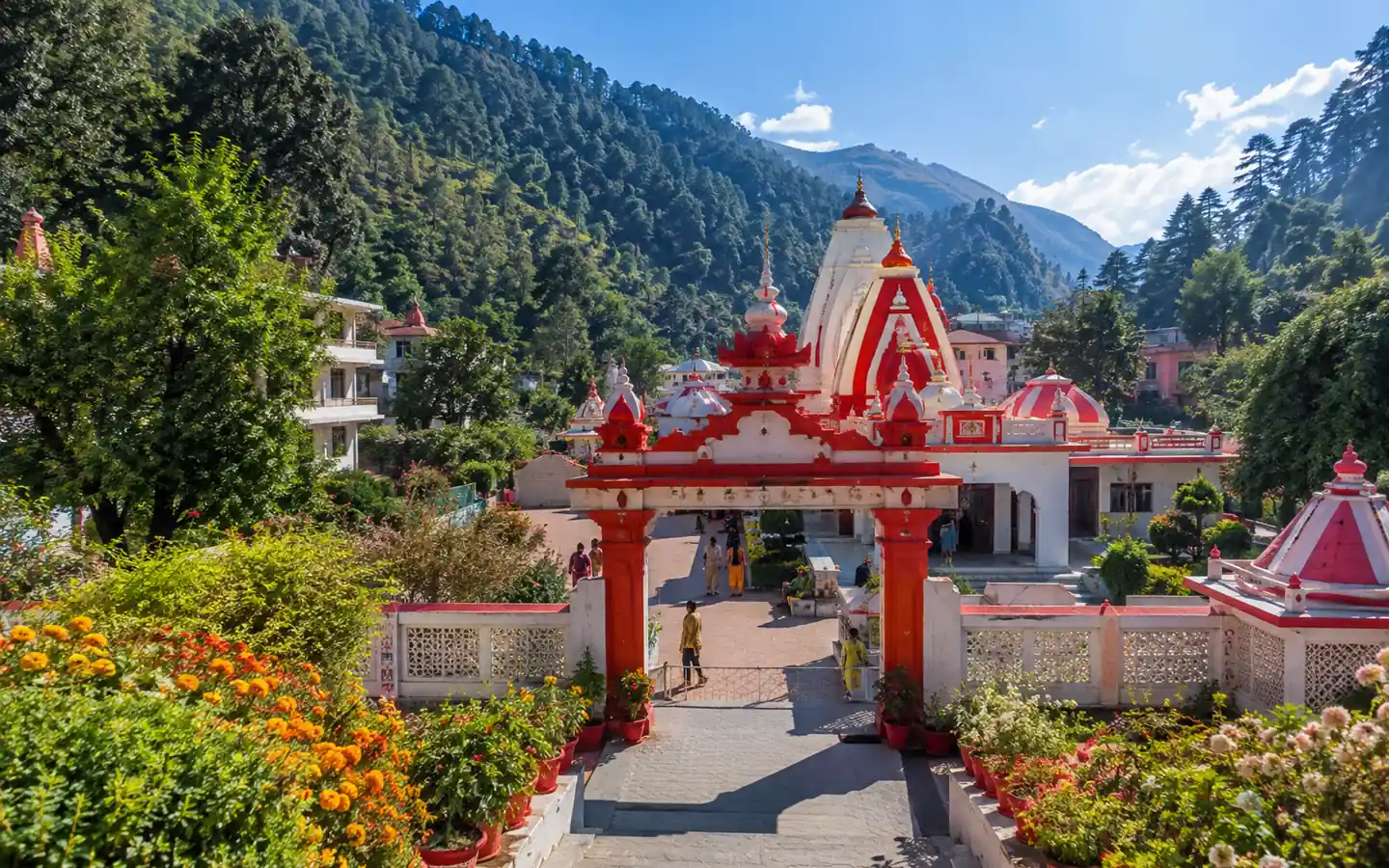
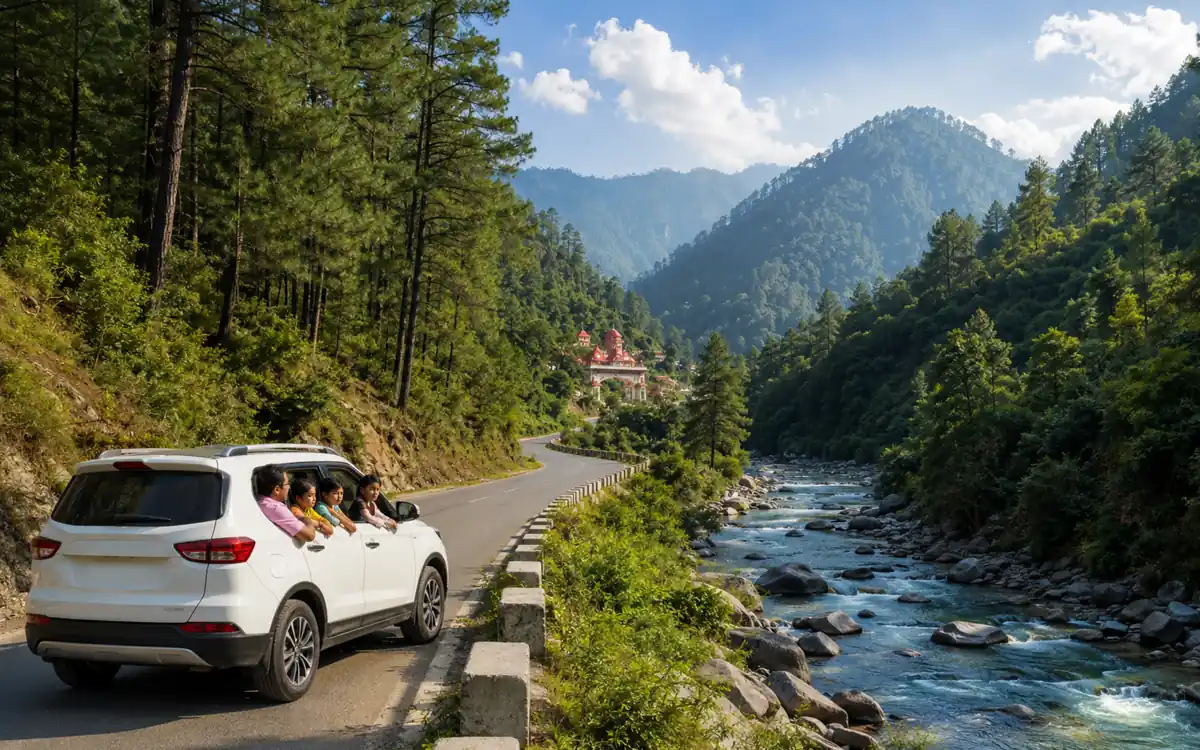
The ashram was established by Neem Karoli Baba in 1964, on land donated by a local resident named Purnanand. It sits in a narrow river valley on the road between Nainital and Almora, which is worth holding on to as a fact, because it explains almost everything practical about visiting: there is no room. The valley is tight, the road through it is the main road east, and the site was never laid out for the number of people who now come.
The name is a road description rather than a religious one. “Kainchi” means scissors, and refers to two sharp hairpin bends at the site that cross one another like scissor blades. If you have ever wondered why traffic there behaves the way it does, that is the answer — the geometry that gave the place its name is the same geometry that jams it. Our route page goes into what those bends mean from the driver’s seat.
Why so many Western visitors come
Steve Jobs travelled here in 1974, after Neem Karoli Baba’s death in 1973, with Daniel Kottke. Mark Zuckerberg visited in 2015, on Jobs’s recommendation. Those two visits are the reason a small ashram on a Kumaon hill road appears in Silicon Valley biographies and, subsequently, in a great deal of international coverage.
We mention it because it explains the crowd, not because it is why you should go. The practical effect is that Kainchi Dham now draws two overlapping streams of visitors — long-standing Indian devotees and a newer international interest — on a road built for neither.
The congestion problem, honestly
This is the part other pages skip, and it is the part that decides whether your visit is good.
The site sits on the only road east from Bhowali. Everything going to Almora, Ranikhet, Bageshwar, Kausani or Munsiyari passes it. Add pilgrims, tourists and buses to a valley with two hairpins in it and very little flat ground, and you get the situation the district has been managing for several seasons: parking pressure severe enough that shuttle services and new parking arrangements have been introduced. We are deliberately not describing the exact shuttle arrangement in force, because it has changed between seasons and we would rather you asked on the day than trusted a web page written months earlier.
What we can tell you with confidence is the shape of the problem, and how to get in front of it.
| When you arrive | What it is usually like | What we would do |
|---|---|---|
| Before 8 am, weekday, off season | Calm. Parking near the site is possible. Short queue or none. | This is the visit everyone wants and almost nobody plans for. Leave Kathgodam around six. |
| Before 8 am, weekend or peak season | Busy but working. The queue moves. | Still the right call. An early arrival on a bad day beats a late arrival on a good one. |
| 9 am to 1 pm, weekday, off season | Moderate. Some waiting, parking further out. | Fine. Allow two to three hours and do not schedule anything tight afterwards. |
| 9 am to 1 pm, weekend or peak season | This is the jam. Vehicles queue on a road with hairpins in it and nowhere to turn. | Avoid if you possibly can. If you cannot, plan the whole morning for it and be prepared to walk in from a distant parking point. |
| Mid-afternoon | Often easing, but you are then in Nainital or on the Almora road at the worst time. | Works if Kainchi is your only stop of the day and you are staying nearby. |
| The week around 15 June | The Mela. Thousands attend. The road does not flow. | Either come for the Mela on purpose, accepting what that means, or stay well away from this road that week. |
Are weekends hopeless?
No, but they are a different trip. A weekend visit that starts at half past nine is a long, hot wait in a car. A weekend visit that starts before eight is usually fine. If your only available day is a Saturday or Sunday in May or June, the early start is not a nice-to-have, it is the entire plan.
What time to leave
| Leaving from | Distance | Leave by | Arriving about |
|---|---|---|---|
| Kathgodam railway station | Roughly 40–43 km via Ranibagh, Bhimtal and Bhowali | 6:00 am for a quiet arrival; 7:00 am is still good off season | 7:15 to 7:45 am |
| Bhimtal | About 20 km via Bhowali | 6:45 am | Around 7:30 am |
| Nainital | 17 km on the Almora road | 7:00 am | Around 7:40 am |
| Bhowali | 9 km | 7:15 am | Around 7:40 am |
| Almora | On the same road, from the far side | Early; this is the quiet approach | Depends on the Kwarab situation — allow extra |
These are deliberately conservative. A pre-dawn arrival at Kathgodam actually helps here: several trains terminate before first light, and going straight up the hill puts you at the ashram close to opening with the whole day still ahead. That is one of the few cases where a sleepless night is genuinely an advantage, and it is covered on our station arrival page.
15 June, and the week around it. The Kainchi Dham Mela falls on 15 June every year — Pratishtha Divas, the ashram’s consecration day. Thousands attend, and the Bhowali to Almora road does not flow that week in any normal sense.
Two consequences worth planning around. First, if the Mela is what you have come for, book everything early, expect to walk a long way, and treat the day as the whole day. Second, and this catches people out: if you are travelling to Almora, Ranikhet, Bageshwar or Munsiyari in mid-June, this road is your road too. A Munsiyari transfer that passes Kainchi Dham on 15 June is not a ten-to-twelve-hour drive. Move the day, or start at four in the morning.
How long to allow, and what the visit involves
In normal, non-peak conditions, two to three hours on site is a comfortable allowance: parking or shuttle at one end, the walk in, the queue, darshan, and time to sit. On a peak weekend, plan a full morning and be pleased if it takes less.
Practical points that come up repeatedly with people we drive:
- Depending on the arrangements in force, you may be dropped some distance from the ashram and continue on foot or by shuttle. Wear shoes you can walk a kilometre in on a slope.
- Sun in the middle of the day in a narrow valley is fiercer than the altitude suggests. Water and a hat.
- The road is the main highway east. Do not stand in it to take photographs of the bends, however good they look.
- Tell your driver whether you want the car held or whether this is a drop. On a congested day a driver who has been sent away cannot easily come back for you, and holding a car is a different booking from a drop — the fare guide explains why.
Combining Kainchi Dham with Nainital in one day
Very common, entirely doable, and the order matters more than people expect.
Do Kainchi Dham first, then Nainital. Kainchi is 17 km from Nainital on the Almora road, so the geography works in either direction — but the timing does not. Kainchi is at its calmest early and its worst mid-morning; Nainital is at its calmest early and its worst mid-afternoon, and carries timed Mall Road restrictions in May, June and October. Doing Kainchi at 7:30 and reaching Nainital by late morning puts you on the right side of both. The reverse order puts you at the ashram in the jam and in Nainital in the restrictions.
A realistic shape for the day, starting from Kathgodam:
| Time | Where | Note |
|---|---|---|
| 6:00 am | Leave Kathgodam | Via Ranibagh, Bhimtal and Bhowali. Roughly 40 to 43 km. |
| 7:15–7:45 am | Kainchi Dham | Close to opening. Allow two to three hours. |
| 10:30–11:00 am | Leave for Nainital | 17 km back along the Almora road through Bhowali. |
| 11:30 am onwards | Nainital | Toll at Tallital on the way in. Lunch, the lake, the town. |
| Late afternoon | Down to Kathgodam or on to your hotel | Do not book a train before early evening. In season the town can hold vehicles at entry points when parking fills. |
If you are staying at Bhimtal rather than Nainital, the same day works better still, because Bhimtal is 11 km from Bhowali and you start already past the junction.
Combining it with a longer journey
Kainchi Dham sits directly on the road to Almora, Ranikhet, Bageshwar and Munsiyari, so it is the natural stop on a longer transfer rather than a detour. That is genuinely convenient — but only if you build the time in. A two-hour stop on a Kathgodam to Almora run makes a two-and-a-half to three-and-a-half hour drive into most of a day, and on the Munsiyari route it is the difference between arriving in daylight and arriving in the dark. Tell whoever is driving you at the booking stage, not at Bhowali.
When to visit
The best months are the same as for the rest of the lower lakes: March to mid-April and October to November for clear weather and thinner crowds. Late April to mid-June is peak, with 15 June the busiest single day of the year. Late June to September is the monsoon, which on this stretch means rain rather than the serious closures that affect the high country — though the road east of here is a different matter, and our monsoon guide covers that. In winter the ashram closes for part of the season, which is the single most important thing to check before planning a December or January visit.
Planning a Kainchi Dham visit?
Tell us your date and where you are starting from. We will suggest a departure time, tell you what we have most recently heard about access and parking, and say plainly if we think your date is a bad one.
Common questions
What time should I leave Kathgodam for Kainchi Dham?
Around 6 am for a calm arrival close to opening, putting you there between 7:15 and 7:45. The journey is roughly 40 to 43 km via Ranibagh, Bhimtal and Bhowali, and takes one and a quarter to one and three quarter hours. From Nainital, leave by about 7 am for the 17 km run.
What are the Kainchi Dham temple timings?
Approximately 7 am to 6 pm. We will not present that as a guarantee: the ashram closes during winter months and has closed at short notice at other times. Confirm close to your date and do not book non-refundable travel around a particular darshan.
Why is it called Kainchi Dham?
“Kainchi” means scissors. It refers to two sharp hairpin bends in the road at the site that cross one another like scissor blades. The name describes the road, not the ashram — and those same bends are why traffic there congests so badly.
How long does a visit to Kainchi Dham take?
Two to three hours on site in normal conditions, including parking or the shuttle, the walk in, the queue and time to sit. On a peak-season weekend, allow a full morning.
Is Kainchi Dham crowded at the weekend?
Yes, but an early arrival still works. A weekend visit starting before 8 am is usually fine; one starting at half past nine in May or June is a long wait in a car on a road with hairpins and nowhere to turn.
What happens at Kainchi Dham on 15 June?
The Kainchi Dham Mela, Pratishtha Divas, the ashram’s consecration day. Thousands attend and the Bhowali to Almora road does not flow that week. It also affects anyone driving to Almora, Ranikhet, Bageshwar or Munsiyari, because that is the same road.
Can I visit Kainchi Dham and Nainital on the same day?
Yes, and they are 17 km apart. Do Kainchi Dham first, early, then Nainital late morning. The reverse order puts you at the ashram in the mid-morning jam and in Nainital during the afternoon Mall Road restrictions in May, June and October.
Why did Steve Jobs and Mark Zuckerberg visit Kainchi Dham?
Steve Jobs travelled there in 1974 with Daniel Kottke, after Neem Karoli Baba’s death in 1973. Mark Zuckerberg visited in 2015 on Jobs’s recommendation. Those two visits are the main reason the ashram is known internationally.
Is there parking at Kainchi Dham?
Parking is severely constrained and the pressure has been enough that shuttle services and new parking arrangements have been introduced. Arrangements have changed between seasons, so ask on the day rather than trusting any web page, and expect to walk part of the way in.
Sources and further reading
Where this page states a fact about roads, permits or public information, these are the sources it relies on. Anything we could not verify, we have said so.